A New Dawn for Raukūmara - Protecting New Zealand’s Forever Forest
Restoring an ancient forest. Reimagining how we care for our future.
Living on the coast beneath the Raukūmara, we understand that the forest is much more than the trees on our mountains. It's our awa, our whenua, our moana, our kai and our homes. One living system, connected from the mountains to the sea. But now when the rain comes, water can be a gift or a threat. Our awa can sustain life or carry mountains of sediment towards the coast. Our homes can be places of sanctuary, or somewhere we find ourselves preparing to evacuate. And what happens in the forest upstream has consequences for all of us downstream.

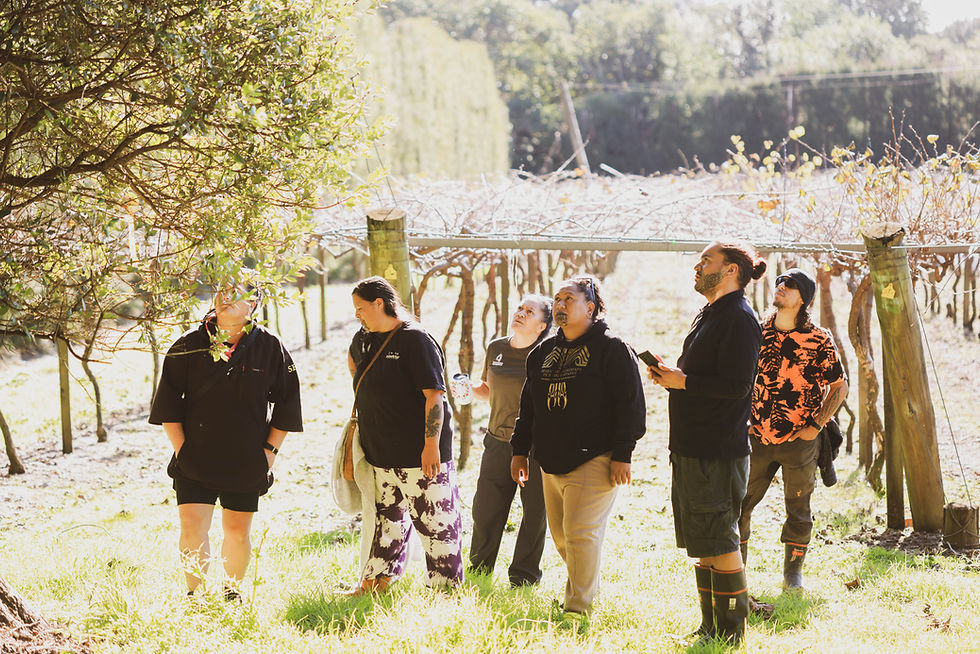
Recently, our Raukūmara Pae Maunga team introduced Department of Conservation Director General Peter Chrisp to our work. We wanted him to see what we're learning, what we're achieving and what still needs to change. Because the scale of this challenge is enormous.
The Raukūmara spans approximately 250,000 hectares, with our restoration programme working across some 150,000 hectares. We've removed more than 12,000 deer and 2,000 goats and undertaken aerial predator control across more than 117,000 hectares. That's a lot of mahi. But the numbers also tell us something uncomfortable. We can remove thousands of animals and still have a forest struggling to grow its next generation.
Our team shared the work underway through our deer management programme - the targeted Deer and Goat culling, DNA-based population monitoring, and the importance of returning to the same places to understand what is changing and whether deer numbers are low enough for the forest to regenerate. Along the way, we stopped at slips where deer tracks criss-crossed the exposed whenua. It was a visible reminder of how deer can hinder recovery, repeatedly disturbing vulnerable ground and making it harder for vegetation to re-establish and stabilise the slopes.
Across Aotearoa, the conversation about deer management is growing. Recent research
has called for a national deer management strategy, while Federated Farmers has highlighted the economic consequences of introduced pest animals. A 2026 Federated Farmers survey estimated that pests cost farmers around $466 million annually through lost production and control costs. While that figure covers a range of pest species, it points to a much wider challenge. The impacts of introduced animals are not confined to the forest or the farm. They affect the health of our landscapes, the resilience of our catchments and ultimately the communities that depend on them.
We know hunting matters to our whānau. It puts kai on tables, brings people together and connects generations to the whenua. But recreational hunting and ecological restoration are not the same thing. One can be about what we take from the forest. The other must be about what the forest needs to recover. Sometimes we're so focused on filling our own puku that we forget the forest needs feeding too. If the goal is a thriving ngahere, we need skilled, focused and sustained culling, the right tools for the right country, sustained effort and monitoring that measures ecological recovery, not simply the number of animals removed.

Ngati Porou and Te Whānau-ā-Apanui are leading the ecological and cultural restoration of our ancestral landscape. We're bringing together a blended family of partners, sciences, skilled people and operational knowledge to restore the Raukūmara as one living system. We're restoring the forest, so the next generation of trees can grow. We're protecting our taonga species, giving kiwi, whio, kōkako and others the conditions they need to thrive. We're measuring the recovery, because success isn't just what we remove, but what returns. We're growing the next generation, creating opportunities for rangatahi and whānau to carry this mahi forward. And through our venison koha programme, we're feeding our people with deer harvested from surrounding farm stations, while keeping a clear distinction in our native forest, where focused culling is about ecological recovery - giving the ngahere the chance to regenerate and thrive.
Our team shared this mahi with Peter. Not because we have all the answers, but because we - like many iwi-led initiatives at place - understand what is at stake and are prepared to keep learning, adapting, work with the willing and doing what's needed. It was encouraging to hear Peter's questions about the programme and the people behind the restoration work, and his warm acknowledgement of the team's skills and expertise.

The Raukūmara doesn't operate according to our budgets, political terms or organisational boundaries. She is a living system, and she needs a system of care and investment that understands that. The scale of the solution must match the scale of the problem. Perhaps the question for Aotearoa isn't whether we can afford to restore our forests. It's whether we can afford the consequences of not doing so. Because the choices we make upstream today will help determine whether water remains a gift or becomes a threat, whether our homes remain sanctuaries or become evacuation sites, and what kind of whenua our mokopuna inherit. The Raukūmara has sustained generations of our people. Now it's our turn to create the conditions for her to thrive for generations more.
It’s a new dawn for the Raukūmara.
References
The Aotearoa Circle (2026). Natural Infrastructure Plan. https://www.theaotearoacircle.nz/focus-areas/natural-capital-restoration/natural-infrastructure-plan
Federated Farmers (2026). Survey of pest impacts on New Zealand farming.
Ministry for the Environment and Stats NZ (2024). Our Land 2024. https://environment.govt.nz/publications/our-land-2024/
University of Canterbury (2026). Research calling for a national deer management strategy.
Raukūmara Pae Maunga. Operational and ecological monitoring reports, 2022–2026.